

Pasta alla Norma is one of Sicily’s best-loved pasta dishes: tender fried eggplant, a simple tomato and basil sauce, and a generous shower of ricotta salata, a firm and salty aged ricotta cheese.

Table Of Contents
Why You'll Love This Pasta alla Norma
I first published this recipe back in 2017. Nearly ten years and countless plates later, I've simplified the process (no more eggplant sweating and no more deep-frying!) without giving up an ounce of the authentic flavor. In fact, no one EVER guessed the eggplant isn't deep-fried. Try it once and you won't make it any other way. But here's more.
- No eggplant sweating. Modern eggplant varieties are not bitter even if you leave the skin on. So skip the salt-and-wait entirely.
- No deep-frying — and you will not miss it! The eggplant is oven-"fried" with just enough olive oil to taste fried, without any of the greasiness. All the golden, silky flavor, a fraction of the oil and mess.
- A signature crispy-peel garnish. Don't throw the peel away — it becomes the crunchy, beautiful finishing touch (more below).
- A true Sicilian classic. Humble ingredients — eggplant, tomato, basil, cheese — that add up to something unforgettable.
- The best summer pasta. At its peak in August, when eggplants are sweetest.
- Naturally vegetarian. A meat-free main nobody feels is missing anything.

Ingredients & Notes
See the recipe card for full information on ingredients and quantities.
Pasta alla Norma is simple, which means each ingredient has to pull its weight. Nail these three and the dish is set up for success.
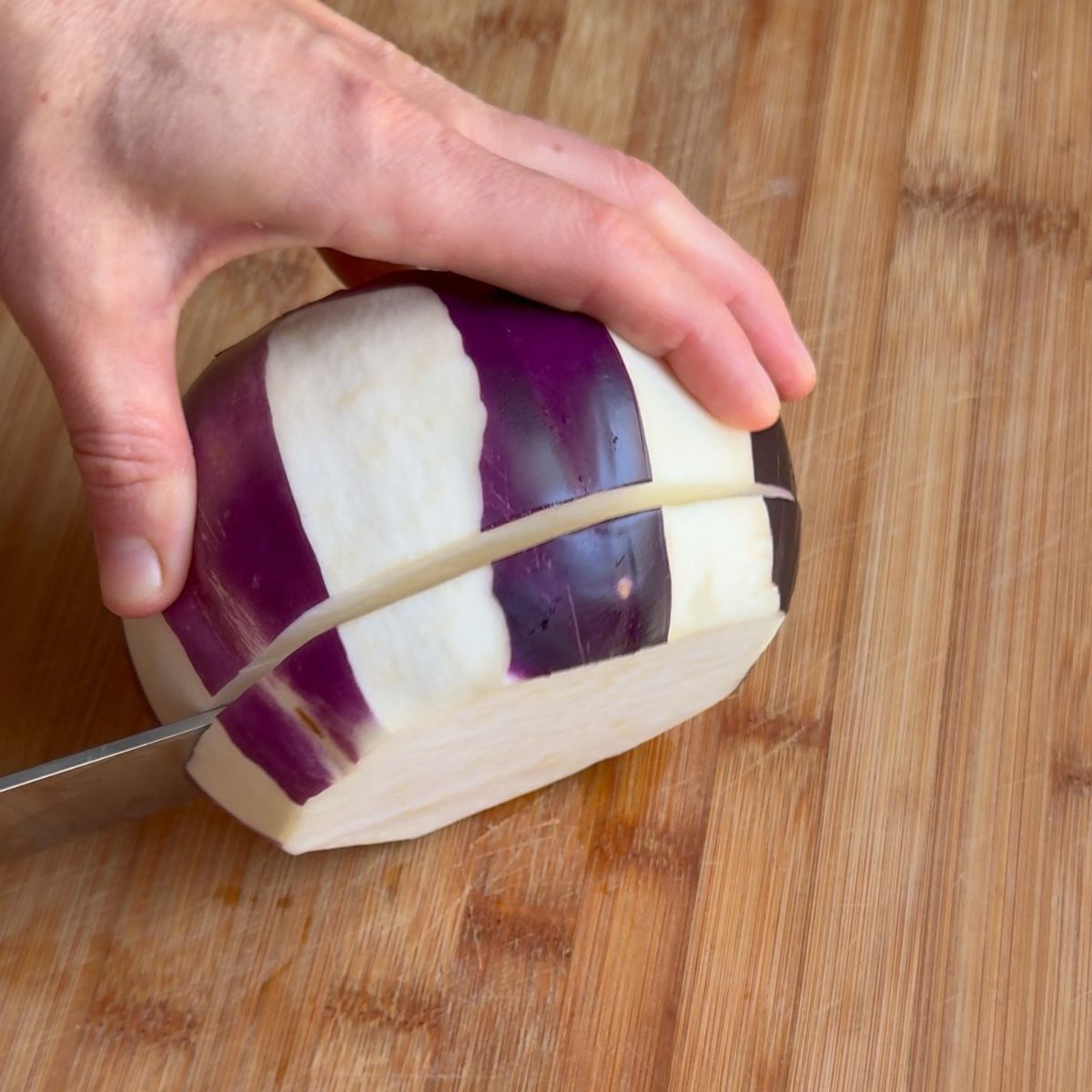
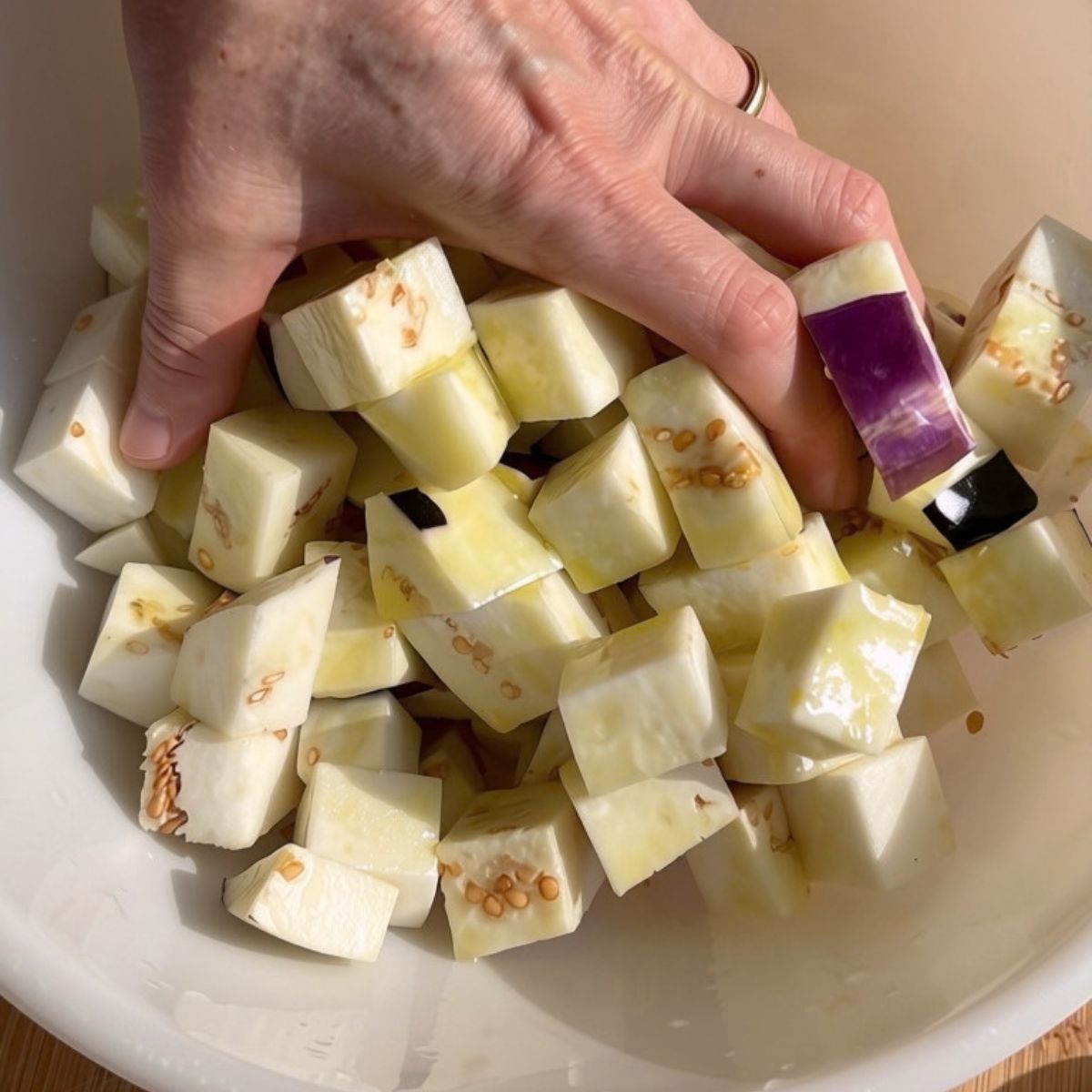
- The eggplant — the star. Use small Italian or Japanese eggplants; they have the best flavor and texture and the fewest seeds. In peak season (August especially) they're sweet enough that you can skip sweating them altogether. Here's how I prep them now: peel them in stripes — a strip of skin off, a strip left on, like a zebra — so you get tenderness without losing all the character of the skin. Then cut into cubes. (Keep those peels — see below.)
- The sauce. It's essentially a quick sugo di pomodoro with the eggplant cooked right in. Make it fresh here, or if you keep a batch of homemade sugo on hand, use that as your base and save a step.
- The pasta. Ridged short shapes like caserecce or rigatoni catch the sauce in their grooves, but classic spaghetti is every bit as traditional and delicious. Use a good durum wheat pasta and cook it properly 'al dente'.
- The ricotta salata. This salty, crumbly aged ricotta is what makes a Norma a Norma — you grate it over the top and it's unmistakable. It can be hard to find in regular grocery stores but it's easy to order online, and worth it. No ricotta salata? Pecorino romano is the closest stand-in; feta or queso fresco work in a pinch.
- The garnish — circles or strips, your choice. Lay fried eggplant circles on top for the classic Sicilian look you'll see in the photos, or add a small heap of fried peel strips for a crunchy, restaurant-feel finish. Both are lovely — pick whichever look you're after, or skip it entirely.
Top Tips - Don't Miss!
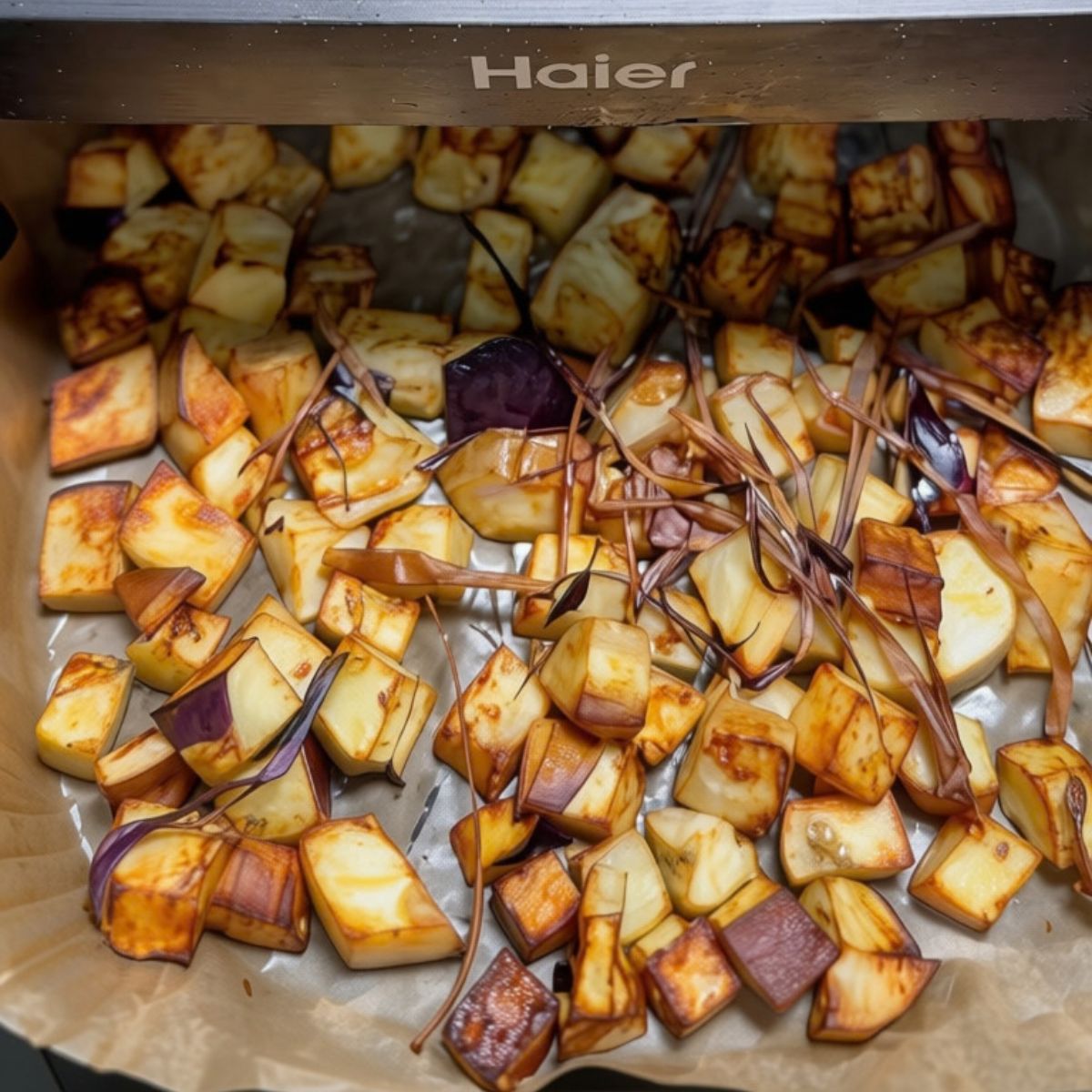
- Be generous with the olive oil. This is what gives oven- or air-fried eggplant that deep-fried taste and silky inside. Coat the cubes well — skimp here and they turn dry and leathery instead of golden and creamy.
- Don't crowd the baking sheet. Spread the eggplant in a single layer, no need to space between the cubes as they'll shrink as they cook. Piled up, they steam instead of frying, and you lose the crisp and fried effect without frying that you were looking for.
- Choose your garnish — circles or strips. Fried eggplant circles give the classic Sicilian look; crispy fried peel strips give crunch and drama. Both work beautifully.
- Cook the pasta a touch under. Pull it about 2 minutes before the package time and finish it in the sauce — it keeps cooking in the pan and comes out perfectly al dente, not soft.
- Make the sauce ahead. It only gets better, and it freezes beautifully — see Make Ahead & Storage below.
Make Ahead
This recipe is built for getting ahead of yourself:
- Fry the eggplant in advance. Cook the cubes up to a day ahead and keep them in the fridge — add them to the tomato sauce straight from the fridge, or make the whole eggplant-and-tomato sauce for up to 2 days in advance,
- The sauce freezes beautifully. Because the eggplant is cooked right into the tomato sauce, you can freeze the whole thing in portions. I usually make extra for winter — a taste of summer months later. Thaw, warm through, and it's ready for fresh pasta.
- Grate and freeze the ricotta salata. Grate it first, then freeze in a bag or container for a few months — that way you always have some on hand without hunting it down, and grated, the texture holds up perfectly.
- Assemble fresh. For the best plate, toss just-cooked pasta with the warmed sauce right before serving, so nothing turns soft.
Storage
Store the sauce, not the dressed pasta. Like most pasta dishes, Pasta alla Norma doesn't keep well once the pasta is tossed with the sauce — it turns soft. So if you're expecting leftovers, cook only the pasta you'll eat and store the rest of the eggplant-and-tomato sauce on its own. It's just as good the next day.
Fridge: the sauce keeps in an airtight container for up to 3 days. Reheat gently in a pan with a splash of water to loosen it.
Freezer: the sauce freezes well for up to 3 months. Thaw, warm through, and toss with freshly cooked pasta
Your Questions Answered
Pasta alla Norma comes from Catania, Sicily. It is traditionally made with fried eggplant, tomato, basil, and ricotta salata. The name is commonly linked to Norma, the opera by Catania-born composer Vincenzo Bellini. The exact origin story is part of the dish’s folklore, but its place in Sicilian cooking is unquestioned.
Both work beautifully. The air fryer is faster, the oven is easier for a big batch. Either way, coat the cubes generously in olive oil and cook until golden, tossing halfway.
Surprisingly, no — no one will ever be able to tell! The secret is to use a generous amount of olive oil and cook the eggplant until it's crisp on the outside and creamy in the middle. That's exactly the texture and flavor you want from fried eggplant, with a fraction of the oil, none of the greasiness and completely hands-off.
Ricotta salata is ricotta that's been salted, pressed, and aged until it's firm enough to grate — salty, crumbly, and milky, nothing like the soft fresh ricotta you spread on toast. It's what makes a Norma a Norma. It can be hard to find in regular grocery stores but is easy to order online, and worth it. If you truly can't get it, pecorino romano is the closest match; feta or queso fresco also work in a pinch.
Ridged short shapes like caserecce or rigatoni hold the sauce best, but spaghetti is the classic and just as good. Use a quality durum wheat pasta.
Yes, naturally. Ricotta salata is cheese, so it's not vegan — leave it off or use a plant-based alternative if needed.)
More Sicilian Recipes
Love authentic Sicilian food? Here's what to try next:


More Recipe With Eggplants
For my all eggplant lovers out there, here's what you'll love to make next:



Love Italian Food?
Sign up for our weekly newsletter to receive tips, tricks and new recipes delivered straight to your inbox!
Full Recipe

Pasta Alla Norma (Authentic Sicilian Recipe)
Video
Ingredients
- 1 lb eggplants
- extra virgin olive oil for tomato sauce plus more for generously coating the eggplants
- 2 cups passata (tomato puree)
- 2 garlic cloves
- handful fresh basil leaves
- 12 oz durum wheat pasta spaghetti or short type of pasta like caserecce
- Salt to taste
- 2 oz ricotta salata (salted ricotta cheese)
Instructions
Eggplants
- Wash the eggplants and peel them zebra-style — a strip of skin off, a strip left on — for tenderness without losing the character of the skin. If you'd like a garnish, reserve the peels (or cut a few extra circles before cutting the rest of the eggplants into cubes — see step 3). Cut the eggplants into ½-inch (1–1.5 cm) cubes.

- Put the cubes in a bowl and coat generously with extra virgin olive oil — be generous, it's what gives you that fried taste without the deep-frying.
- Oven Method: Arrange in a single layer on a parchment-lined baking sheet and roast at 200°C (392°F), fan on, for 25–30 minutes, tossing halfway, until golden outside and creamy inside. Air fryer Method: cook at 200°C (392°F) for about 20-25 minutes, tossing halfway.For a garnish (optional): add a few whole eggplant circles rubbed with oil to the sheet (same timing), or add the reserved peels, cut into thin strips and rubbed with oil, for the last 10–12 minutes for both methods.
Tomato Sauce
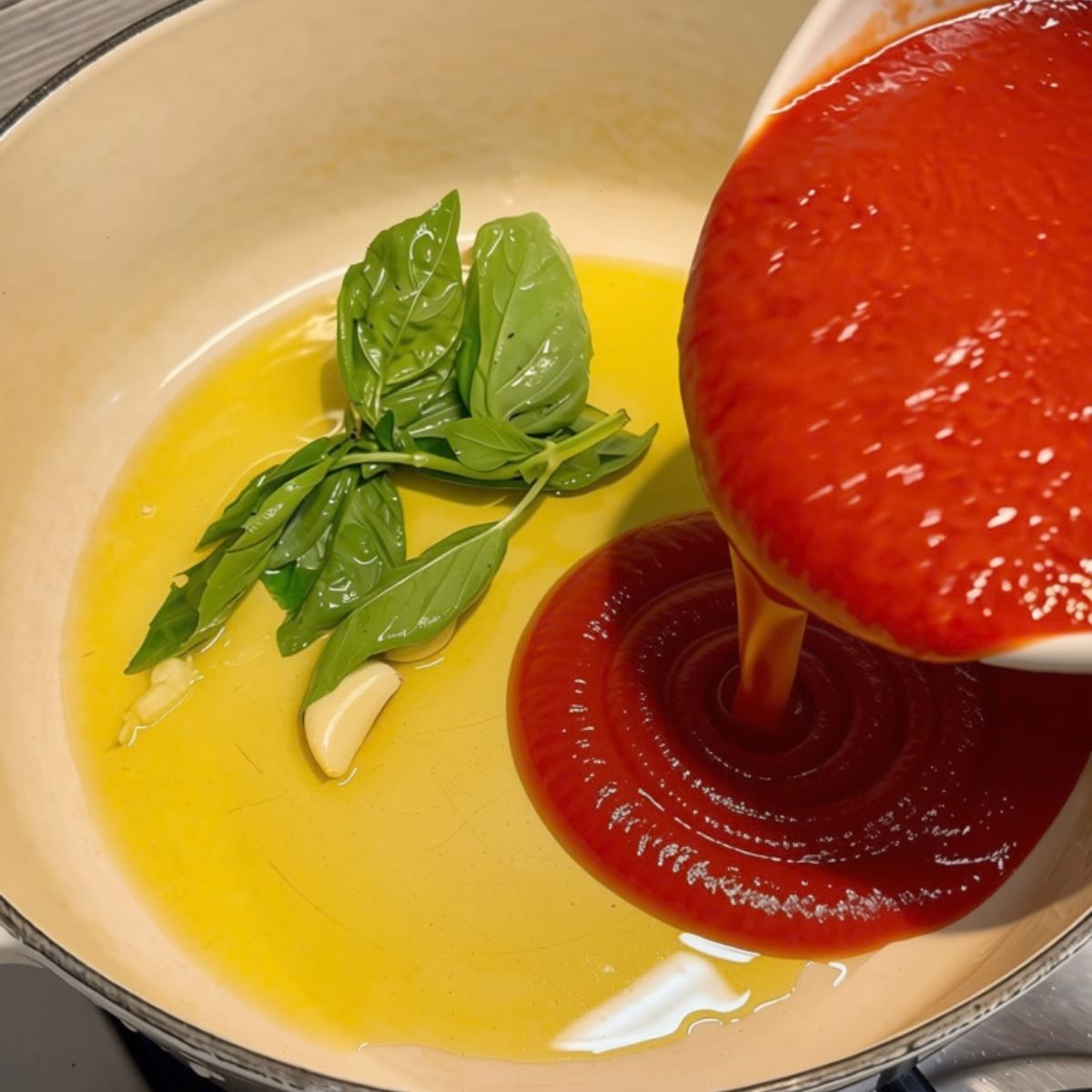
- In a large skillet, add a generous splash of olive oil, the garlic cloves (crushed with the flat of a knife), and half the basil. Add the passata (tomato pure), then swirl a little water in the empty jar or can and add that too. Bring to a simmer and cook 5–7 minutes, until slightly reduced. Stir in the remaining hand-torn basil and salt to taste.Have your own sugo di pomodoro on hand? Use about 1 ½ - 2 cups of it in place of the passata and basil — just warm it through before adding the eggplants in the next step.
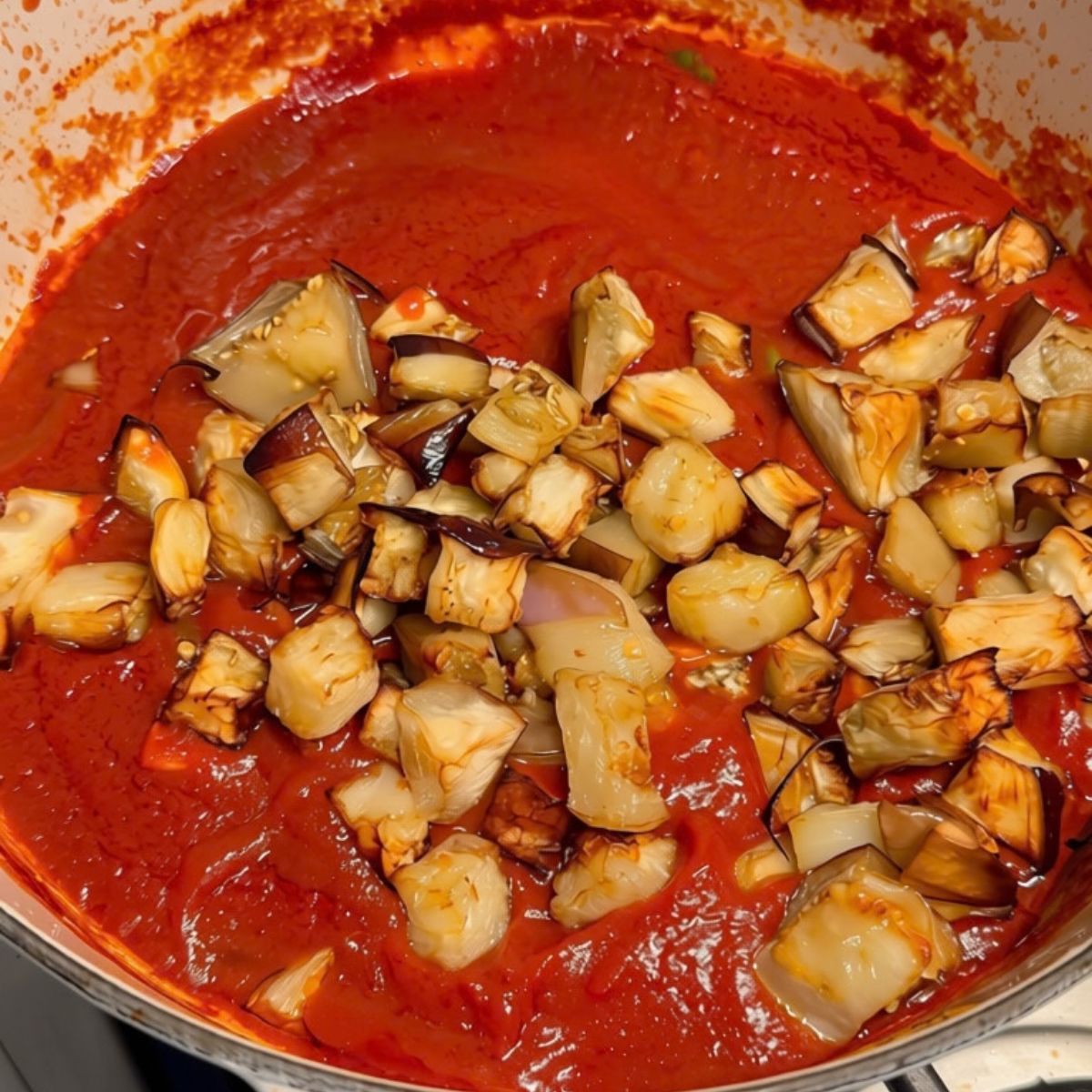
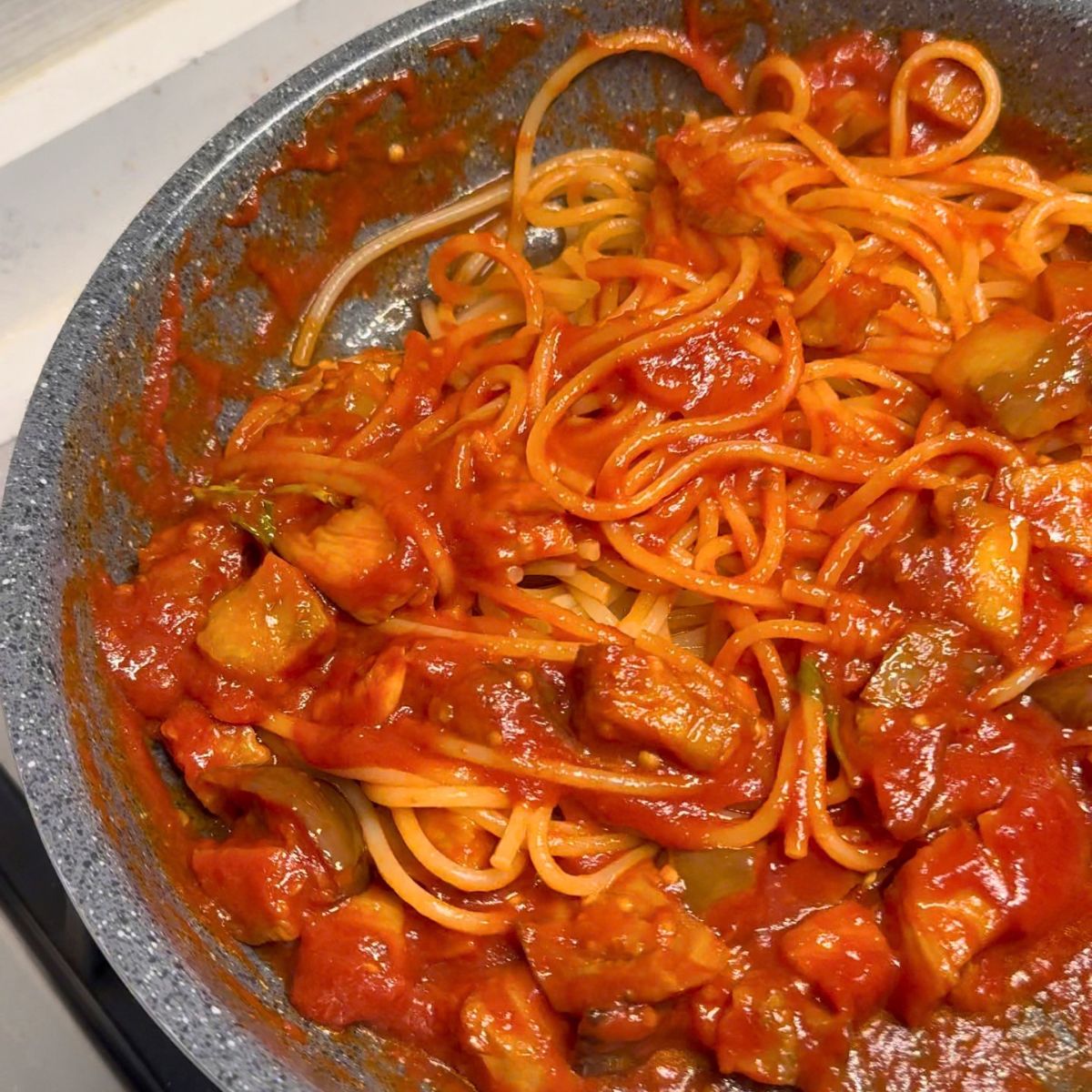
- Add the fried eggplant cubes and toss to coat in the sauce.
Cook Pasta
- While tomato sauce is cooking boil pasta ‘al dente’ in well salted water, usually 2 minutes less than the package says. Drain, reserving some cooking water.
- Add the pasta to the sauce and toss. If it feels dry, loosen with a splash of pasta water.
Garnish and serve
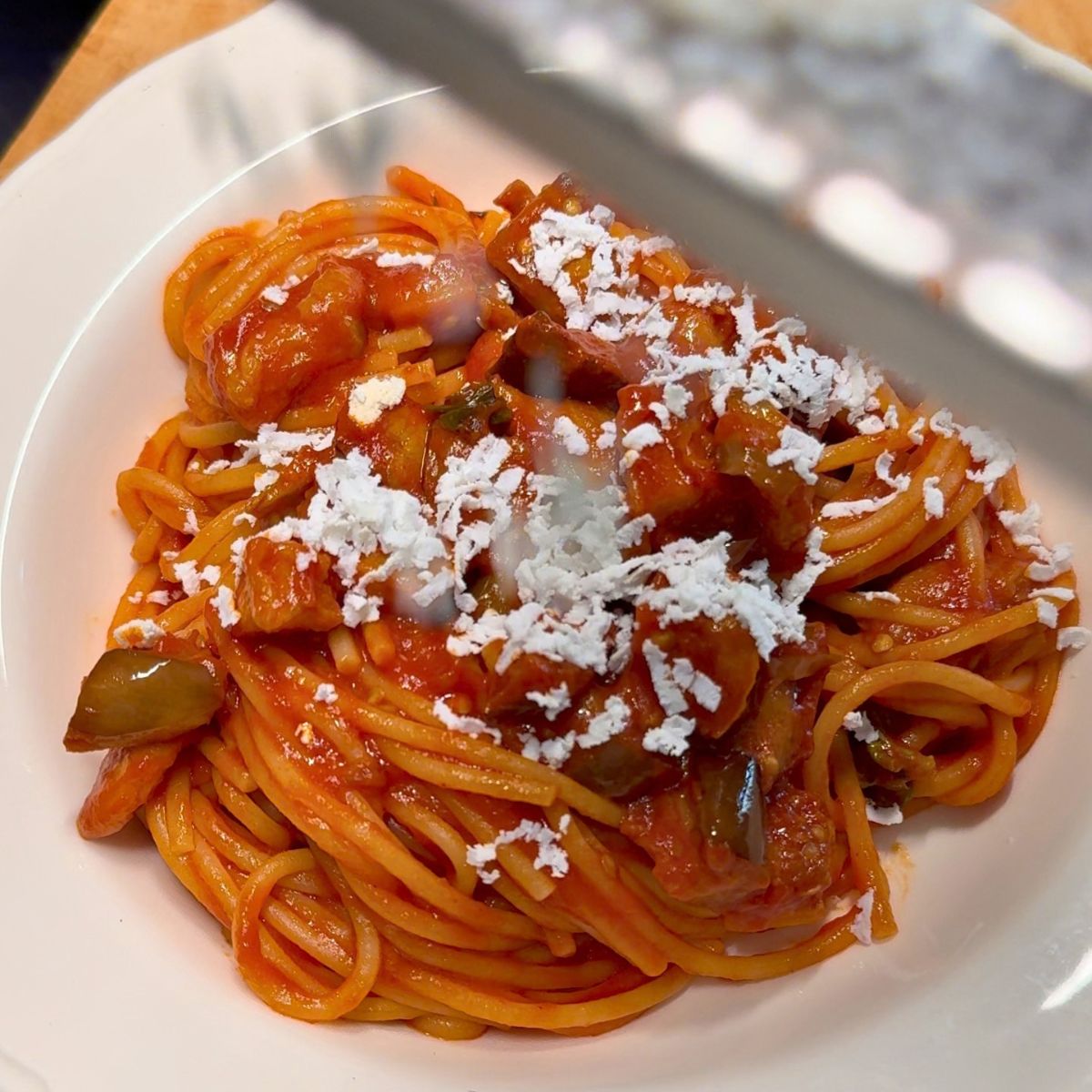
- Top each plate with fried eggplant circles or crispy peel strips (or neither) and a snowfall of freshly grated ricotta salata.
Notes
- Be generous with the olive oil — it's what gives oven- or air-fried eggplant that fried taste and creamy inside.
- Don't crowd the baking sheet/air-fryer basket; spread the eggplant in a single layer so it fries instead of steaming.
- Garnish with fried eggplant circles (classic look) or crispy fried peel strips — your choice, or skip it.
- Pull the pasta 'al dente' ~2 minutes early and finish it in the sauce.
- Grate the ricotta salata and freeze. If you buy a block of ricotta salata grate it and freeze it for a few months, so you always have some on hand.
Sauce keeps 3 days in the fridge, or up to 3 months frozen. Reheat with a splash of water.
Nutrition
Nutrition information is automatically calculated, so should only be used as an approximation.
Leave a Reply